A dictionary of Yao compiled by Chauncy Maples, based on vocabulary collected in Zanzibar by Bishop Steere, by Rev. Alexander Hetherwick in Blantyre, Malawi, and by Maples in Masasi and Newala (now in Tanzania) as well as Likoma Island in Malawi.
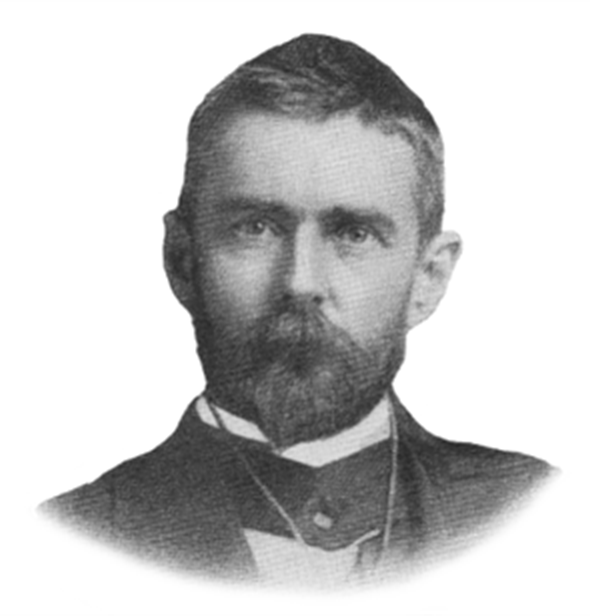
Figure 1. Chauncy Maples
“Study it not in books, whether they be translations, grammars or vocabularies. Use these only for reference, but study the language by keeping ears open, and minds free from theories as to how the people might be expected to express their thoughts.”
Yao is a Bantu language spoken by over three million people in Mozambique, as well as southern Malawi and southern Tanzania. It is part of the Rufiji-Ruvuma cluster of languages in southeast Africa
Yao is referenced as:
YAO in Ethnologue (https://www.ethnologue.com/language/yao/)
P.21 Yao in Maho’s updated Guthrie Classification Codes
https://en.wikipedia.org/wiki/Yao_language
Maples is the author of the introduction to the dictionary. However, the introduction explains that he compiled the Yao vocabulary by correcting Bishop Edward Steere's Yao vocabulary and adding words collected by Rev. Alexander Hetherwick. He does not describe any regular Yao speaking Africans as collaborators on the dictionary. But he does mention a "mere boy" who helped him translate the Gospel of St. Matthew into Yao.
Maples himself describes his dictionary as preliminary and insufficient but an improvement on errors in previous Yao handbooks. His main concern was distinguishing meanings of the same word forms. If the meanings were distinct but related, he separated them by a number list (1,2,3) under the same heading. If the meanings seemed entirely distinct to him, he would divide them among different entries
Maples described this dictionary as a vocabulary, rather than a lexicon, because it lacked etymological or grammatical information.
[Headword,] [alternative headwords,] [part of speech abbreviation] [{1.}definition,{1+N. alternate definition}.] [(clarifying note on usage)][({some form of the word see} related word)].[Example sentence,] [translation of sentence].
| Item | Formatting | Notes | Database Correspondent | |
| 1 | Headword | Followed by comma | Headword | |
| 2 | Alternate headwords | Followed by comma | Alternate Headword | |
| 3 | Part of speech abbreviation | Italicized | See chart 2 | Parts of Speech |
| 4 | Definition | Italicized | If there are multiple definitions, each definition will have a numerical digit with a period in front of it, starting at 1. Each definition will be followed by a comma, and the final definition will have a period at the end. | Definition |
| 5 | Clarifying note on usage | Italicized, in parentheses | Definition | |
| 6 | See related word | See is italicized, related word is not, in parentheses. Sometimes vide is used instead of See, treat these the same | *See exception checks, not always the format | Related |
| 7 | Example sentence, | Followed by a comma | Example | |
| 8 | Translation of example sentence | Italicized, followed by a period. | Translation |
Figure 2 Template Notes
Abusa, n. s. pl. Shepards, (seembusa).
Achambuye, n. s. pl. 1. Masters of a slave, 2. ancestors.
Akwelume, n. s. Maternal uncle.
Chile, adj. Ready.
Chiliuka, ku-,v. n. To turn back.
Chitiwi, n. s. Chitiwicha msokolo, rice water.
Enelana, ku-, v. n. To suffice.
Gangasika, ku-, To split.
Msusa, Kutama msusa, To sit on one’s heels.
Aluka, ku, v.1.to be light, easy &c.2.to be deprived of power, to be deposed,3.to be brought to naught,4. to deteriorate.
Chuku, n. s. The rainy season. Chuku cha kutanda the beginning of the rains.
We have often expanded abbreviations in the database. However, users consulting the images may find the abbreviations table below helpful.
| adj. | Adjective | |
| adv. | Adverb | |
| n. | Noun | |
| n. a. | Not applicable | |
| n. s. | Noun (singular) | |
| p. pr. | Personal pronoun | |
| pers. pr. | Personal pronoun | |
| pf. | perfective | |
| poss. pr. | Possessive Pronoun | |
| v. | Verb | |
| v. a. | Active verb (actions) | |
| v. n. | Neuter verb (states of being) | |
| v. r. | Unknown, recorded as v. r. | |
| v. s. | Unknown, recorded as v. s. | |
| v. t. | Verb transitive | |
| Verb. sub. | Substantive verb | |
| vide | See | |
| &c. | Etc. |
Chauncy did not provide any grammar notes beyond mentioning debates about the origin of pronominal prefixes. This chart is adapted from the Wikipedia summary of Yao noun classes to fit the standard chart used on this website.
| Class | Possible Proto-Bantu Prefixes | Yao Prefixes | Notes and Pairings | |
| 1 | mu | m-, mu-, mw- | Singular of 2 | |
| 2 | ba, βa, β? | wa-, a-, acha-, achi- | Plural of 1 | |
| 3 | mu | m-, mu-, mw- | Singular of 4 | |
| 4 | mi | mi- | Plural of 3 | |
| 5 | di, li, yi, i | li-, ly- | Singular of 6 | |
| 6 | ma | ma- | Plural of 5,15 | |
| 7 | ki | chi-, ch'- | Singular of 8 | |
| 8 | bi, bi, βi, li | i-, y- | Plural of 7 | |
| 9 | N | n-, ny-, mb-, (nw-) | Singular of 10 | |
| 10 | N, li-N | n-, ny-, mb-, (nw-) | Plural of 9, 11 | |
| 11 | du, lu | lu- | Singular of 10 | |
| 12 | ka | ka- | Singular of 14 | |
| 13 | tu | tu- | Both singular and plural | |
| 14 | bu, βu | u- | Plural of 12 | |
| 15 | ku | ku, kw- | Infinitive | |
| 16 | pa | (pa-) | Locative | |
| 17 | ku | (ku-, kwa-) | Locative | |
| 18 | mu | (mu-, mwa-) | Locative | |
| 19 | pi | |||
| 20 | ?u, ?? | Singular of 22 | ||
| 21 | ?i | |||
| 22 | ?a | Plural of 20 | ||
| 23 | i | Locative | ||
| 24 | ka | |||
| 25 | n(I) |
 Dictionaries
 Search
 Browse
 People